A vacuum pump can be one of those engine components that receive little attention until a leak appears or a vacuum-dependent system begins behaving differently.
The pump itself performs the active work of creating negative pressure, but its effectiveness also depends on something far less conspicuous: the seal between the pump and its surrounding components.
That seal may look insignificant, yet deterioration can allow oil or air to escape from an area designed to remain tightly contained. Understanding the difference between a pump problem and a sealing problem can prevent unnecessary component replacement.
Why Modern Engines Use Vacuum Pumps
Many diesel engines and an increasing number of turbocharged petrol engines cannot rely solely on intake-manifold vacuum.
A dedicated mechanical or electric vacuum pump therefore supplies negative pressure to systems that may include the brake booster, EGR actuators, turbocharger control mechanisms, and variable intake components.
Because braking assistance can depend on this supply, vacuum pumps are not merely convenience components. Motorservice describes automotive vacuum pumps as safety-relevant because they commonly supply the vacuum required for brake boosters.
The pump creates a vacuum, but the surrounding joints and connections must remain sealed for the system to function consistently.
What the Vacuum Pump Gasket Actually Does
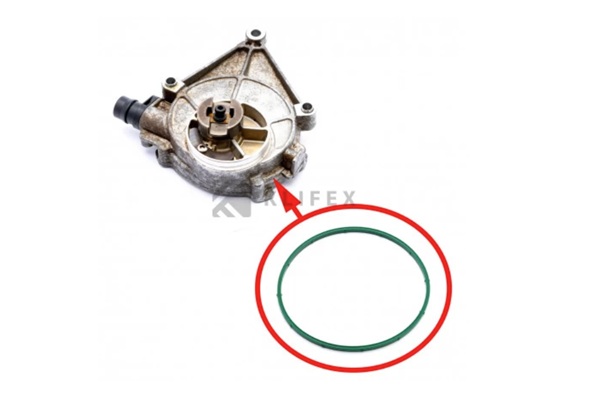
The gasket does not generate a vacuum or regulate its strength. Its task is simpler: it seals the mating surfaces where the pump attaches to the engine or another part of the assembly.
Depending on engine design, the same joint may also need to contain engine oil. This means a deteriorated vacuum pump gasket can create more than one type of leak.
A failed seal may allow oil to seep externally, particularly around the pump housing. In other cases, loss of sealing integrity can permit air leakage that affects the vacuum system.
Why the Seal Deteriorates Over Time
Vacuum pump seals operate in a demanding environment. Repeated heat cycles gradually alter rubber and elastomer materials, while oil exposure and engine vibration add further stress.
Several factors can accelerate deterioration:
- Prolonged exposure to high engine temperatures.
- Hardening or flattening of the original sealing material.
- Contamination around the mating surface.
- Improper installation during previous repairs.
- Distortion or damage to the pump or engine mounting surface.
Oil Leak or Vacuum Leak? The Difference Matters
One of the most useful diagnostic steps is determining what kind of failure is actually occurring.
External Oil Leakage
Oil commonly appears around the pump-to-engine joint when the gasket has hardened or lost compression. The leak may initially be minor, leaving only dampness around the housing.
As it worsens, oil can spread across nearby engine components, making the true source more difficult to identify.
Cleaning the area and checking where fresh oil first appears can help distinguish a pump gasket leak from a valve-cover, camshaft, or other upper-engine leak.
Loss of Vacuum Integrity
If the sealing failure affects the vacuum side of the system, the consequences can be less visible.
Vacuum-operated actuators may respond slowly or inconsistently, while the pump may appear to work harder to maintain the required pressure differential. Depending on the design and severity of the leak, brake assistance or other vacuum-controlled systems can also be affected.
Any change in brake-pedal assistance requires prompt professional diagnosis because several components, not only the pump gasket, can influence booster vacuum.
Why a Gasket Failure Can Be Mistaken for Pump Failure
Oil around a vacuum pump often leads to the assumption that the pump itself is damaged. Yet visible leakage does not automatically indicate internal mechanical failure.
The pump may still produce adequate vacuum while the external joint has simply lost its seal. Likewise, weak vacuum can originate from hoses, check valves, reservoirs, actuators, or connections elsewhere in the circuit.
When a Wider Repair Makes More Sense
A gasket-only repair is appropriate only when the pump and surrounding components remain serviceable.
If inspection reveals damaged internal valves, worn pump mechanisms, cracked housings, degraded seals elsewhere in the unit, or multiple age-related faults, technicians may instead consider vacuum pump repair kits that address several serviceable components together.
The decision should be based on the actual condition of the assembly rather than automatically choosing either the smallest or largest possible repair.
What Should Be Checked Before Reassembly?
Before fitting a new gasket or repairing the pump, the mating surfaces deserve close attention. Old gasket material, scratches, distortion, or contamination can prevent a new seal from performing correctly.
The pump housing should also be inspected for cracks, while vacuum hoses and check valves should be checked for leakage.
Correct gasket orientation and manufacturer-specified tightening procedures are equally important. Uneven or excessive tightening can distort a housing or prevent uniform gasket compression.
Conclusion
A vacuum pump gasket performs a modest task, but sealing failure can create oil leaks, vacuum loss, and symptoms that resemble a much more expensive pump fault.
The most effective approach is to diagnose the complete system before replacing parts. By checking vacuum performance, leak location, gasket condition, mating surfaces, and the health of the pump itself, it becomes much easier to determine whether the engine needs a simple seal replacement or a broader vacuum-pump repair.